The Raid on Lindisfarne – June 8th, 793
Off the northeast coast of Northumbria in what is now northern England is the site of one of the most important Christian monasteries in Anglo-Saxon Britain, Lindisfarne. A force of Viking raiders from Scandinavia—likely Norwegian seafarers—landed unexpectedly on Lindisfarne and attacked the monastery.
They killed monks and clergy, enslaved some survivors, as well as stole valuables and sacred objects and desecrated the church and altars, while burning parts of the monastery complex.
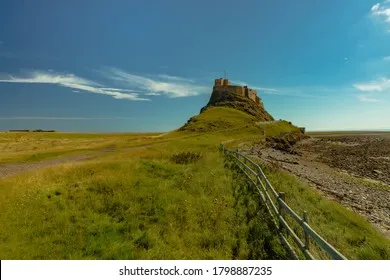
There were several motivations for Viking raids such as Lindisfarne, and we’ll focus on this initial event as an illustration.
Lindisfarne was rich – Monasteries often functioned almost like secure treasuries. It was also an easy military target, providing an ideal hit-and-run target for seaborne raiders. The Island was a very isolated location which was poorly defended, and of course was full of noncombatants.
As of the time of the raid, Viking Maritime Culture has expanded, where by the late 700s, Scandinavian seafarers had Improved shipbuilding technology and developed long-range navigation skills. This allowed them to begin exploring and raiding beyond Scandinavia locales, and they pressed this advantage to a fabled extent.
There is some thought too of possible Internal Pressures in Scandinavia that drove Vikings abroad. Population growth and Competition among chieftains would have been a factor, as well as desire for increased wealth and prestige. All of this inspired a political centralization and civic pressure that pushed warriors outward to find their own fortunes and prove their worth back home. It’s a pity that in this early raid the raiders were not named in contemporary sources, so we don’t know the identities of the specific Viking leaders. However, major figures alive during the event included:
In England:
King Æthelred I of Northumbria ruler of Northumbria during the raid
Bishop Higbald of Lindisfarne – bishop at the monastery during/after the attack
In Wider Europe:
Charlemagne – King of the Franks, later Emperor; one of Europe’s dominant rulers
Offa of Mercia – powerful Anglo-Saxon king in the south that would someday also become England
Alcuin of York – famous Northumbrian scholar at Charlemagne’s court who wrote about the raid in shock and grief afterward. He described the church as “spattered with the blood of the priests of God.”
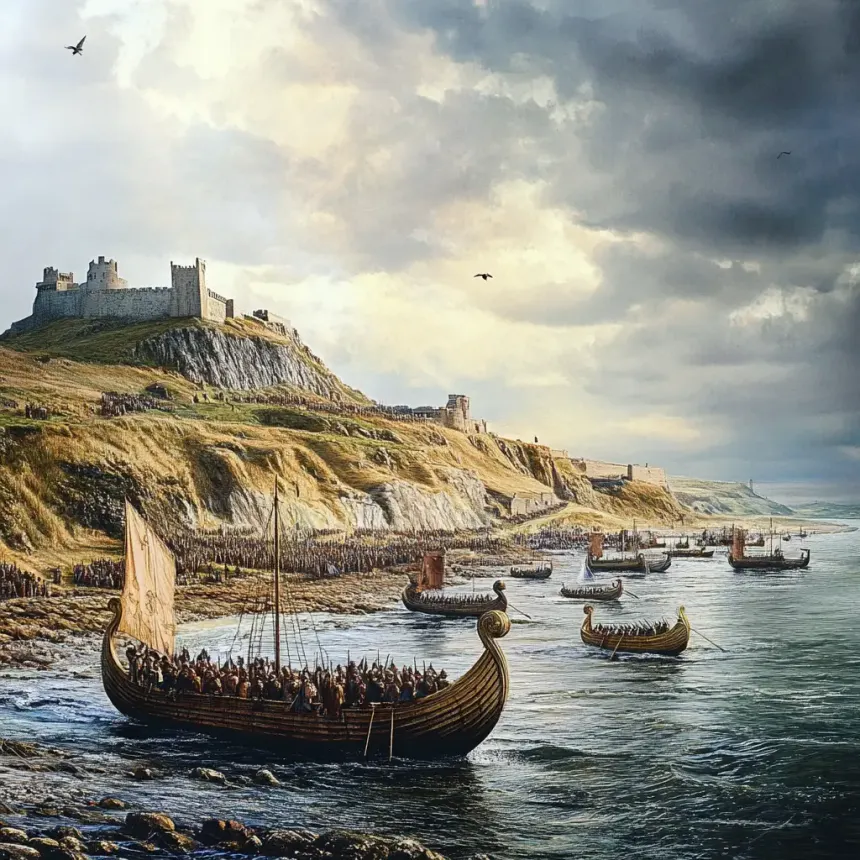
Impact on Europe
To Christian Europe, this was a horrifying psychological shock because Lindisfarne was one of the holiest sites in England and people believed saints should protect sacred places. Indeed, the monastery is associated with St. Cuthbert, and a major center of scholarship and pilgrimage. It was really a spiritual heart of Northumbrian Christianity. The idea that pagan raiders could destroy such a holy site shook religious confidence.
Beginning of the Viking Age
Historians often use 793 as the symbolic start of the Viking Age because the Lindisfarne raid was the first major, widely recorded Viking raid in western Europe. It heralded centuries of Viking raids, settlement, trade, and conquest, though there were smaller earlier Scandinavian contacts/raids before 793.